
Azorean Whaling and Its Conversion
The WhaleThis flow follows Azorean communities from participation in Yankee whaling through local industrial hunting and the later turn toward whale watching.
increasing Bearing strength in each event
 decreasing
Bearing strength in each eventdecreasingA Bridge Across the Atlantic
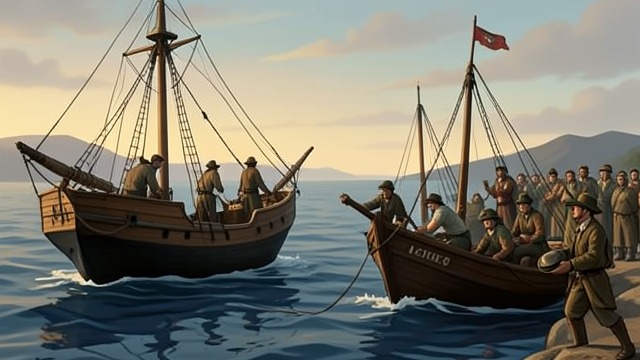
Island Sailors and Whaling Ships
An Atlantic connection
American whaling ships call at the Azores for food and crew. Azorean sailors use their passage to reach New England and establish lasting ties across the ocean.
A shared maritime culture
The exchange carries skills, people, and family names between island ports and American whaling towns. Whaling becomes a route of migration as well as a trade.
A Local Hunt Begins
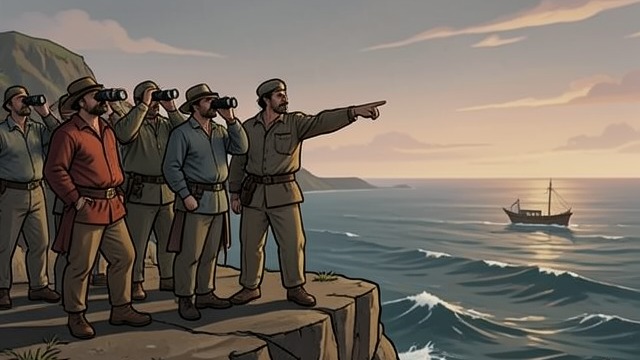
Whaling Close to Home
Borrowed techniques
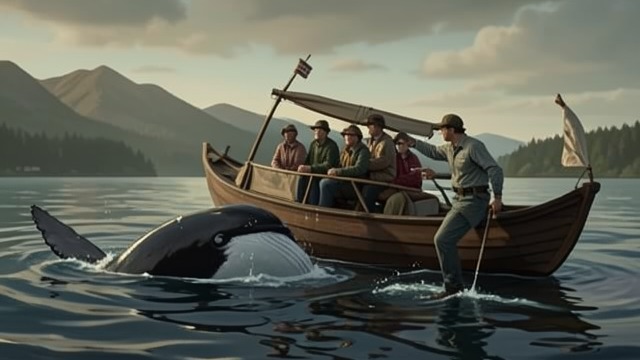
Azorean crews adopt methods learned from American whalers and use lookout stations to locate whales. The hunt becomes part of local work and community organization.
A difficult livelihood
Farmers and fishers join dangerous expeditions whose rewards may be important to island households. Practical need and the spectacle of the chase coexist.
Industrial Processing
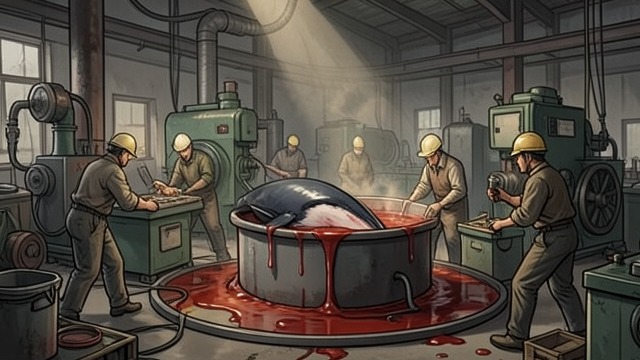
The Factory at São Roque
A mechanized operation
At the São Roque whaling factory, sperm whales are hauled from the sea and processed with modern machinery. Oil, meat, and other products are used with little left over.
An immediate legacy
Residents remember the smell, the blood, and the physical dangers of the work. The industrial factory makes the former intimacy of small-boat hunting part of a larger production system.
The Last Hunts
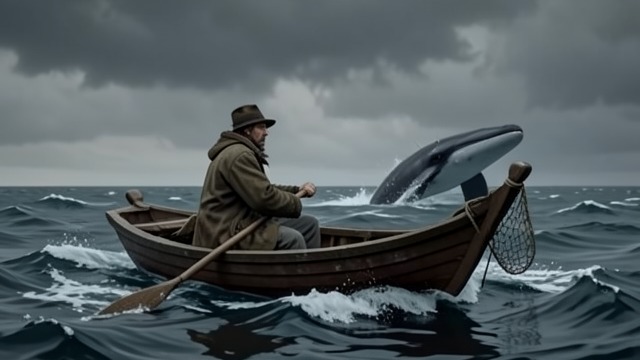
A Dying Craft
Skill and reward
A small community of hunters continues to use traditional boats and hand-forged weapons. A whale can bring substantial income, making the work difficult to abandon.
A changing economy
The industry is losing markets and specialist workers. Its survival depends on a trade whose products and methods are increasingly out of step with international restrictions.
Watching Instead of Hunting
A New Livelihood
An end to commercial hunts
Commercial whaling ends in the Azores as economic conditions and legal obligations change. Local communities must find another way to relate to the animals.
The visitor’s gaze
Operators develop whale watching, turning the living whale into the focus of a different business. The transition changes the economic relationship without making human influence disappear.
From the eighteenth century
From 1850
From 1942 through the late twentieth century
In the 1970s and early 1980s
By 1986 and the years afterward
